
Camera inspection: $300–$750
The first and non-negotiable step. Most operators credit it against the works if you proceed.
Relining turns a recurring drainage problem into a finished one. The joints that roots come through are sealed along the whole run, so there is no way back in, and nothing above the pipe gets disturbed to do it.
Relining is a structural repair, not a cleaning method, and the distinction matters when you are comparing quotes. Jetting restores flow through a pipe that is still cracked. A liner restores the pipe.
That also means it is not always the answer. It cannot correct a run that has sagged or lost its fall, and it has nothing to line against where a section has collapsed. A camera survey separates those cases in about an hour, and the answer changes the cost by a multiple.
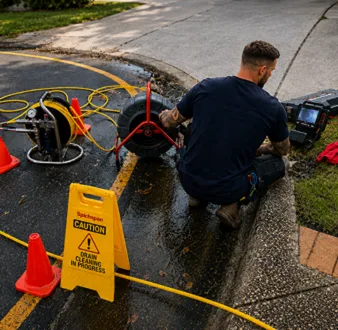

A crack that opens in summer and closes in winter produces a fault that comes and goes, which is maddening to diagnose and very easy to dismiss as bad luck.
Many established West Pennant Hills homes still run earthenware pipework that cracks as the Hills’ reactive clay soil moves through wet and dry spells.
A liner is continuous through the affected length, so seasonal movement no longer has a joint to work on. On reactive ground that is the difference between a repair that lasts and one that reappears the next dry summer.
Properties on a slope often have long drainage runs, sometimes crossing the whole block to reach the main. The practical questions are where the inspection openings are and whether the liner can be drawn through in one length or needs a second access.
That is worth establishing before quoting. A single long run costs less per metre than the same distance broken into stages, and the difference is decided by access, not by the pipe.
An open joint leaks in both directions. On a low-lying block that means stormwater and groundwater entering the sewer through cracks, which is called infiltration, and it quietly overloads a line that would otherwise cope.
Heavy bushland tree cover drops leaves and silt straight into gutters and stormwater pits, packing them tight until the water has nowhere to go.
It shows up as a system that backs up in wet weather and behaves perfectly in dry. If that is the pattern, sealing the run is the fix, and no amount of clearing will reproduce the result.
Clay is rigid, round and predictable, and that geometry is exactly what a liner wants. The resin sleeve cures hard against a barrel that holds its shape, and the short pipe lengths that make clay joint-heavy are the same joints the liner seals in one pass.
So the material that causes the most recurring blockages in older streets is also the easiest to repair properly without digging. That is a genuinely lucky combination and it is why relining suits this housing stock so well.
Backing onto Cumberland State Forest with mature gardens on every street, West Pennant Hills sends roots hunting into old pipe joints, the top cause of recurring blockages here.
Excavating on a slope is a different job from excavating on the flat. Access for a machine is often impossible, the spoil has to go somewhere, trench walls need support, and reinstating a tiered garden or a retaining structure can cost more than the drainage work it was dug for.
Relining sidesteps all of it. The line is repaired from an existing access point, and the surface above stays exactly as it is. On a difficult block the saving is not marginal, it is often the difference between doing the job and deferring it.
Reactive clay soil moves with the seasons, lifting in the wet and shrinking back in a dry spell. Rigid drainage laid through it gets flexed every year, and the joints are where that movement is absorbed until they stop absorbing it.
It is the reason drainage faults on these soils cluster after a long dry followed by heavy rain. The pipe did not fail that week; it finished failing that week.
The first and non-negotiable step. Most operators credit it against the works if you proceed.
Domestic sewer across Sydney in 2026. Longer single runs sit at the lower end of it.
Seals one defect. Right where the rest of the run is sound and the ground is stable.
Length, diameter and how many branches need reinstating are what move the number inside that band.
Excavation is only half the cost. Replacing the driveway or garden above it is the other half.
Figures reflect the 2026 Sydney market rather than a quote. You get your own number once we have seen inside the pipe. Figures here are indicative of the 2026 Sydney market rather than a quote from us, you get your own number as a fixed price before any work starts.

We find the fault, measure it from an access point, and check the fall is intact. That last check is what stops a liner being installed into a belly.
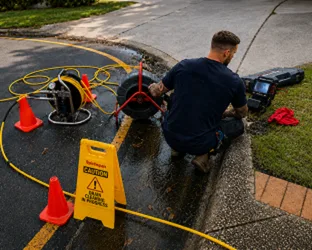
Per metre, with access and junction reinstatement itemised, and the excavation comparison alongside it so you can see both.
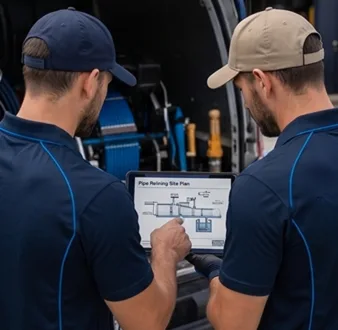
Clean, install, cure. One access point, one day for most homes, and no trench across the property.

Branches reopened, final footage, certificate and notification. Keep it with the property file, it is worth real money at sale.
Describe what the drain is doing and how often. We will tell you whether it sounds structural or whether a clean and a maintenance interval is the honest answer.
The questions that come up before every relining job, answered with real numbers.

Phone is quickest. The form reaches the crew covering West Pennant Hills, and the first step is always the survey.

Leave your details and our local West Pennant Hills team will call you back fast.